
Balavoine, Goldman, Calogero: three generations, the same style of songwriting
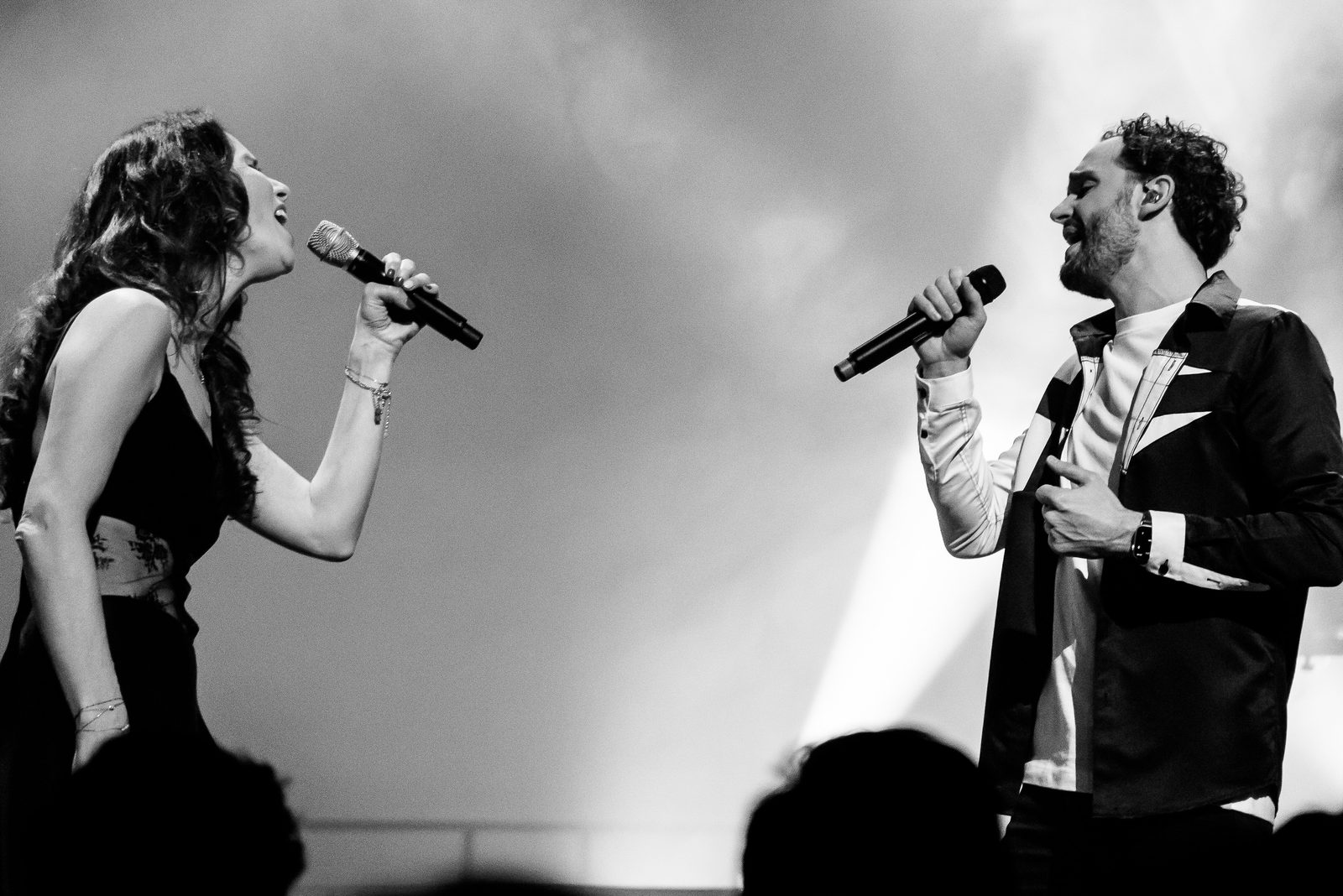
On 20 May 2017, in Morlaàs, we held a dinner-concert dedicated solely to three songwriters: Daniel Balavoine, Jean-Jacques Goldman and Calogero. Just over two hours, around thirty songs – and no others.
It wasn’t a matter of putting together a line-up. It was a question we’d been asking ourselves ever since our four Goldman evenings the previous year: why do these three go together so well? Thirty years separate them. On paper, they have nothing in common.
Two hours on stage provide an answer that no amount of listening on headphones can give.
What sets them apart, first of all
A great deal, and this must be stated before anything else.
Balavoine wrote with a sense of urgency, often in protest against something, and died at the age of thirty-three, leaving behind a short and intense body of work. Goldman built a career as a craftsman, writing for others as much as for himself, and chose to call it a day whilst at the top of his game. Calogero came along later, trained in band-style rock, and almost always worked with lyricists rather than on his own.
Three temperaments, three approaches to the craft. And yet, in a set, the seams are invisible.
One: the voice rises where it hurts
This is the most obvious point, and the hardest to maintain when covering their songs.
All three write melodies that, at the crucial moment, reach for a note too high to be sung comfortably. Not too high to be sung at all: too high to be sung effortlessly. That difference is everything.
This isn’t virtuosity; it’s drama. When a voice reaches that point, the listener hears the strain before they hear the word. The emotion lies in the physical tension, not in the lyrics.
The practical consequence – and it’s a harsh one – is that these songs cannot be transposed. Lower them by a tone to make them comfortable, and you end up with decent songs that nobody can understand why they were ever a hit.
Two: the words remain ordinary
Take their lyrics and look for a rare word. You’ll be searching for a long time.
Whilst some French chanson cultivates imagery and wordplay, these three write using the vocabulary everyone knows. Phrases you might say at the dinner table. The art isn’t in the words themselves, it’s in the order of the words and where they fall within the rhythm.
That’s why an audience sings along without having learnt the words: there’s nothing to remember that they don’t already know.
That’s also what makes them tricky to perform. A simple lyric forgives no sloppiness in interpretation – there’s no fancy phrase to hide behind.
Three: the song tells a story; it does not merely illustrate
In all three, something happens between the first line and the last. Someone arrives somewhere, realises something, loses something.
That’s not all that common. Many songs – including some very good ones – establish a mood and hold it for three minutes. These ones move forward. There’s a before and an after, and the chorus doesn’t quite mean the same thing the first time round as it does the last.
From the stage, it’s very tangible: you don’t sing the final chorus the same way as the first. If you do, the song falls flat, and you don’t understand why. That was the first thing we learnt when putting this repertoire together.
How it changes when you string them together
A whole evening devoted to these three brings out a fourth point, one we hadn’t seen coming.
Their audiences aren’t the same, yet they end up becoming one. People who’ve come for Goldman discover they know the Calogero songs. The younger ones, who’ve come for Calogero, recognise Balavoine songs they thought they didn’t know. A connection that isn’t explained anywhere becomes clear within two hours.
And there’s an effect we hadn’t anticipated: at that pace, the set is exhausting. Three styles of songwriting, all aiming for the same point of tension, without a hint of irony, without a light-hearted song to catch one’s breath. We’ve since learnt to slip something else in between. This isn’t a criticism of the three of them – it’s the price you pay for what they do.
And for a band playing today?
We write our own songs, and that evening taught us more than any manual ever could.
Three things came out of it that we still apply today. Place the high point of the melody on the word that matters, not the one that sounds good. Be wary of obscure words, which flatter the writer but alienate the listener. And make the song move between its beginning and its end, even if only slightly.
These are the rules of the craft, not of the artist. That’s precisely why they’re passed down.
If you’re organising an evening of this sort, do get in touch: we know the repertoire, and now we know the pitfalls too.
Nelly and Thomas