
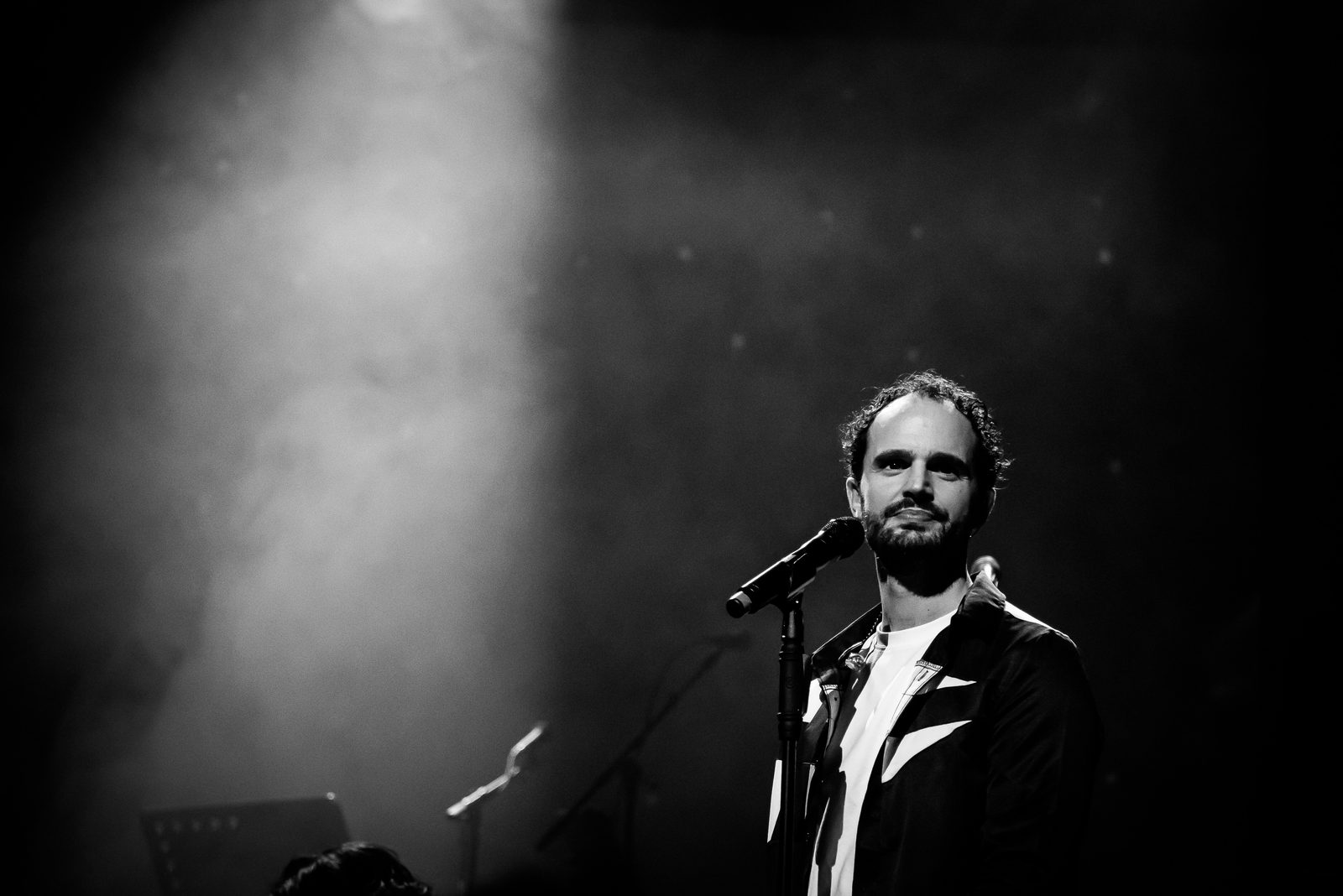
Performing Balavoine’s songs on stage: what works, and what doesn’t
Everyone knows the songs. That’s precisely what makes it tricky.
Performing a Balavoine song in front of a live audience isn’t the same as performing a track that the audience is only vaguely familiar with. Everyone has their own version in their head – the one from the radio, the one from a funeral, the one from a car in 1985. You’re not performing against silence; you’re performing against a memory.
The problem with the voice, which must be faced head-on
Balavoine sang very high. Not ‘a bit high’: so high that his vocal range became part of his identity, just as much as his lyrics. The soaring notes in ‘Sauver l’amour’ or ‘Tous les cris les SOS’ aren’t mere embellishments; they are the songs themselves.
This raises a question that no band can sidestep: transpose, or give up.
Transposing down makes the song singable, but strips it of what made it so heart-wrenching – that feeling that the voice is about to crack. Not transposing means running the risk of ending the evening hoarse, or worse, falling flat in front of three hundred people who know the original off by heart.
We don’t have a one-size-fits-all answer. We have one rule: we don’t transpose a song where the vocal tension is the whole point. We play it in the original key, or we don’t play it at all.
What always works
Songs where the lyrics carry the piece on their own, without the vocal performance being the main focus. ‘Mon fils, ma bataille’ is the perfect example.
It’s a song about a father fighting for custody of his child, written in 1979, at a time when hardly anyone was singing about such things. Forty-five years on, it still silences a room – and it’s not nostalgia at work, it’s the subject matter. In every audience, there’s someone for whom this story is deeply personal.
Songs like these can handle anything: a duet, a solo piano, a village hall, an open-air venue. They don’t need arrangements; they just need the room to fall silent.
What doesn’t work
The tracks where the original arrangement did half the work.
Balavoine was a man of the eighties, in the technical sense: synthesisers, drum machines, dense productions. Performed as a duet with piano, some tracks lose their driving force and become strangely flat. It’s not that they’re played badly – it’s just that there isn’t enough of the song left once the trappings are stripped away.
The test is simple, and we do it for all our covers, not just his: we play it once, on its own, without an audience. If it holds up like that, it’ll hold up on stage. If not, no arrangement will save it.
The pitfall of imitation
This is the most common mistake – and the most understandable.
When you cover someone as distinctive as him, the temptation is to reproduce everything – the tone of voice, the breaks in the phrasing, the way he bites off the ends of sentences. It works for ten seconds. The audience recognises it, smiles, and then starts to compare. And when it comes to comparing yourself to Balavoine, nobody comes out on top.
What we’ve come to realise over the past twenty years is that a tribute isn’t an imitation. The audience doesn’t come to hear his voice again – it exists, it’s recorded, they can listen to it whenever they like. They come to come together around songs that matter. It’s very different, and it’s much more accessible.
It’s been going on for twenty years
Nelly and Thomas met in 2005, near Pau, at a tribute show for Daniel Balavoine. That’s literally how TidyMess came about.
Since then, we’ve performed his repertoire four times in Morlaàs, in 2016 and 2017, and played a special concert on 7 March 2026 – at the Daniel-Balavoine Hall in Bizanos, forty years after his death.
Every time, the same thing happens halfway through the concert: someone in the audience starts singing a little too loudly, and everyone joins in. That’s when we know it’s working. Not when we’ve sung well – when they’re singing.
Nelly and Thomas